
Neighbourhoods
Centrum (Old Centre)
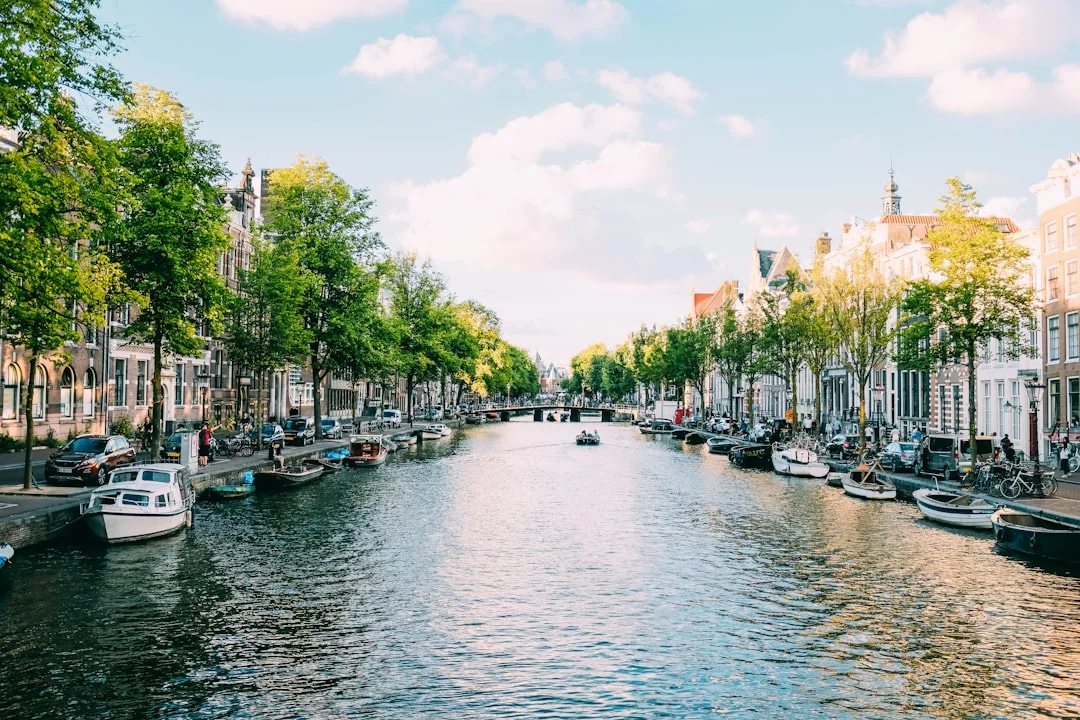
The historic heart of Amsterdam — UNESCO canals, the medieval old centre, and most of the city's famous sights, all within walking distance.
- Historic
- Lively
- Cultural
Centrum is Amsterdam's medieval core — the dense circle of streets inside the canal belt, anchored by Dam Square and stretching to Centraal Station, the Red Light District, and Nieuwmarkt. The most-visited part of Amsterdam by far, with the Royal Palace, the Oude Kerk (1306), the Nieuwe Kerk, and the city's main shopping streets. Walkable, photographed, and the place where you'll spend your first hour after arrival whether you planned to or not.
Best for
First-time visitors arriving at Centraal Station
Royal Palace, Nieuwe Kerk, and the National Monument on Dam Square
Compact walking — almost everything is within 15 minutes
Visitors curious about the Red Light District (factually, not voyeuristically)
Late-night dining and bars (the city's busiest after-dark zone)
Avoid if you want
A quiet residential neighborhood — Centrum is wall-to-wall tourists by 10:30
Authentic local food (most Centrum kitchens are tourist-aimed)
Quiet windows at night — Damrak and the surrounding hotels are noisy
Less-photographed Amsterdam — every corner here is on Instagram
Quick Facts
Best time: Very early morning (07:00-09:00) or late evening (after 22:00) for atmosphere
Main attractions: Dam Square, Royal Palace, Oude Kerk, Nieuwmarkt, Begijnhof, De Wallen
Vibe: Dense, touristy, photogenic, historically layered, busy
Average meal price: €25-50 per person (Centrum is ~30% more expensive than the rest of the city)
Transport: Centraal Station — all trams, all metros, all ferries converge here
Walkability: Excellent — Centrum is the most walkable area in Amsterdam
Skip if: You want to avoid tour groups (impossible here between 10:00-19:00)
Centrum is what Amsterdam was before it had suburbs. The medieval city — dammed off the Amstel in 1270, walled by 1300, expanded canal by canal until the 17th century — is what you're walking through when you cross from Centraal Station into Damrak. It's all here, layered: the 1306 Oude Kerk, the 1648 town hall (now Royal Palace), the 1880s shopping arcades, the 1970s coffeeshops, the 2010s gentrified hotels. It's the dense, photographed, sometimes-exhausting heart of the city. Locals avoid it most of the time. Tourists can't avoid it, and shouldn't try — almost everything Amsterdam is famous for happens here.
What it's actually like
Centrum is wall-to-wall pedestrian traffic from 10:30 to 19:00 every day in season. Damrak alone — the main street from Centraal to Dam Square — runs at New York-density during the day. The pedestrian shopping streets (Kalverstraat, Nieuwendijk, Leidsestraat-edge) are loud, busy, and lined with the same chain shops as every European capital.
What changes is the layer beneath. Step one block off Damrak in any direction and you're in 17th-century streets where most buildings haven't been renovated above the ground floor — the upper windows show original wooden beams, gabled tops, hoists. The Oude Kerk (1306) is in the middle of the Red Light District. The Begijnhof (1346) is hidden behind a wooden door off the Spui square. The medieval and the carnival sit on top of each other.
After 22:00 the daytime tourist crowd thins; bars, restaurants, and coffeeshops take over. The vibe shifts: less family-tour, more young-traveler. De Wallen specifically becomes its evening self after dark — a tourist destination on one of its sides, a residential and working district on the other.
Where to start
If this is your first day in Amsterdam and you're arriving at Centraal Station, here's a 90-minute orientation walk.
Exit Centraal Station on the south side. Walk south along Damrak — the main road. It's commercial, noisy, full of tourists and trams. Look up at the building facades: late 19th-century commercial architecture, more grandiose than what you'll see deeper in the city.
After 8 minutes you'll reach Dam Square. Stop here. The Royal Palace (1648) is on your right, the Nieuwe Kerk behind it, the National Monument (1956 WWII memorial) on the eastern side. This is the geographic center of Amsterdam.
Walk south from Dam down Kalverstraat (pedestrian shopping street). After 6 minutes you reach Spui — a small square with a bookmarket on Fridays, the Het Lieverdje statue, and the wooden door of the Begijnhof. Push the door open: the 14th-century inner courtyard is free to enter and almost always quiet.
From Spui, walk east two blocks to the Munttoren (a 17th-century clock tower) and the Bloemenmarkt (the floating flower market — touristy but worth ten minutes).
Loop back north through De Wallen — the Red Light District — to Nieuwmarkt and the Waag (1488 weighhouse, in the middle of the square). End at Café Hoppe or one of the Nieuwmarkt terraces.
Where to eat and drink
Eating well in Centrum requires walking past the obvious places. Damrak, Kalverstraat, and the immediate Dam Square radius are mostly tourist-aimed kitchens with prices 30-50% above what the same food costs elsewhere. The good Centrum places sit one or two streets back from the busy strips.
Café Luxembourg at Spuistraat 24 — classic Amsterdam grand café, breakfast through late dinner, mains €18-30. Big windows, Spui terrace, locally still respected after 30+ years.
Café Hoppe at Spui 18-20 — operating since 1670, possibly the oldest continuously running café in Amsterdam. No food beyond bar snacks, but the dark wood interior and the spilling-out-onto-the-square terrace are the experience.
D'Vijff Vlieghen at Spuistraat 294-302 — five connected 17th-century canal houses, traditional Dutch cuisine in nine small dining rooms. Mains €30-45. Book a week ahead.
New King at Zeedijk 115-117 — long-running Cantonese restaurant in Amsterdam's small Chinatown, dim sum at lunch (€4-7 per dish), mains €15-25. Cash preferred.
Bird Snackbar at Zeedijk 72-74 — Thai street food in a narrow takeaway-and-counter space, €8-14 per dish. The opposite of fine dining; consistently good.
Restaurant Bord'Eau inside Hotel de l'Europe at Nieuwe Doelenstraat 2-14 — Michelin-starred, fine dining, around €175 for the tasting menu. Book 3-4 weeks ahead.
Where to stay
Centrum has the largest hotel concentration in Amsterdam and the widest price range — €100 hostels through €1,500 suites. The trade-off everywhere is noise: Centrum hotels rarely sleep quietly. Choose a back-facing room or accept the soundtrack of late-night Damrak.
Sofitel Legend The Grand at Oudezijds Voorburgwal 197 — former 1411 city council building, then town hall, then luxury hotel since 1992. Courtyard, indoor pool, around €450-700 per night.
Hotel de l'Europe at Nieuwe Doelenstraat 2-14 — operating since 1896, Amstel-side, classic European grand hotel. €380-800 per night.
NH Collection Krasnapolsky at Dam Square 9 — historic luxury directly on Dam Square, €280-500. Famous Winter Garden breakfast room.
Hotel TwentySeven at Dam 27 — small luxury, eight suites, from €800 per night. Quiet despite the Dam Square location.
For mid-range (€140-250): NH City Centre, Kimpton De Witt, Citizen M Amsterdam. For budget under €120: hostels around Damrak (Stayokay, Generator). All of these book direct on their own sites or via Booking.com.
The Red Light District (De Wallen)
De Wallen — the historic red light district — sits east of Damrak around the Oudezijds Voorburgwal and Oudezijds Achterburgwal canals. Sex work is legal and regulated in the Netherlands; the workers in the famous windows are licensed independent contractors, not trafficked. The area's reputation has changed considerably in the past decade as Amsterdam has actively reduced its visibility — fewer windows, fewer coffeeshops, more residential.
Practical etiquette: do not photograph sex workers under any circumstances. This is enforced by the workers themselves, by other visitors, and by police. Do not stand in groups blocking the windows. Do not film coffeeshop interiors. These rules feel obvious but are violated constantly; respect them and the area is fine to walk through.
The area is also the oldest part of Amsterdam — the Oude Kerk, built in 1306, is the city's oldest building and sits literally in the middle of De Wallen. Many Amsterdam visitors walk through without engaging with the sex industry side of it at all; the architecture and the small canals make it worth seeing as a historic neighborhood, separate from its reputation.
After 22:00 it gets busier and noisier; after midnight it's mostly young male tour groups doing the obvious. Daytime visits are perfectly normal and not seedy at all.
Hidden corners locals know
The Begijnhof at Spui — a 14th-century inner courtyard with the oldest wooden house in Amsterdam (1528) and a small English Reformed Church. Free entry through a wooden door at Spui 30. Almost always quiet, even on the busiest days of the year. Closes at 17:00.
The Oost-Indisch Huis at Oude Hoogstraat 24 — the original 1606 headquarters of the Dutch East India Company (VOC), the world's first multinational corporation. The courtyard is open during university hours (the University of Amsterdam now uses the building). Plaque-history rather than museum-experience.
The Allard Pierson Museum at Oude Turfmarkt 127-129 — the city's archaeology museum, small but excellent, €15 entry, often nearly empty. Egyptian, Greek, and Roman collections.
Schreierstoren at the corner of Geldersekade and Prins Hendrikkade — a 1481 defense tower, one of the few medieval city-wall remains. Free to look at; the café inside opens 11:00-22:00.
The Beurs van Berlage on Damrak — the 1903 former stock exchange, now a cultural venue. Free to enter the lobby; major exhibitions ticket-only. Berlage's architecture (Hendrik Berlage, designed 1898) is foundational to modern Dutch design.
What to skip
Madame Tussauds on Dam Square. Overpriced wax museum identical to the Madame Tussauds in every other city, €27 entry. Skip unless you specifically came for wax figures.
Most of Damrak's pancake restaurants. €18-25 for what costs €10-12 elsewhere in the city. Pancakes Amsterdam (Berenstraat in Negen Straatjes) is a better choice 6 minutes' walk away.
The Heineken-branded merchandise shops near Dam Square. The Heineken Experience is in De Pijp, not in Centrum, and the shops here are tourist-priced licensed retail.
Coffeeshops directly on Damrak. They're priced for tourists. The smaller coffeeshops on side streets (Greenhouse, The Bulldog branches in side streets, Boerejongens) are roughly the same price as anywhere else in the city.
Most of the canal-cruise dock vendors on Damrak. Same prices as online booking, longer waits, less choice of operator. Book via GetYourGuide or directly with smaller operators.
Getting around
Centrum is the city's transport hub — almost every Amsterdam tram, every metro line, and the GVB ferries converge at Centraal Station. Within Centrum itself, you walk.
Centraal Station: trains to Schiphol Airport (15 min), Utrecht, Rotterdam, and international destinations
Trams 2, 4, 12, 13, 17, 24 all serve Centrum
Metro lines 51, 52, 53, 54 connect to Centrum via Nieuwmarkt and Rokin stations
GVB ferries to Noord depart 24/7 from Centraal Achterzijde — free
GVB single ticket: €3.40; 24-hour: €9.00
Cycling through Centrum is the local norm but the pedestrian density at peak hours is challenging — walk if you don't already cycle confidently
Best time to visit
Very early morning (07:00-09:00) is when Centrum looks like itself, before the tour buses arrive. Walk Damrak at 08:00 and you'll find it nearly empty, with the early commuters arriving for trains and the cafés just opening.
Late evening (after 22:00) is the other quiet stretch. Dinner crowds wind down by 21:30; the late bar/coffeeshop crowd takes over slowly. Between 22:30 and 24:00 the streets carry residents and late workers more than tour groups.
Off-season (October-March, excluding Christmas week) sees noticeably lower tourist density. Centrum is still busy, but the difference between a January Thursday and an August Saturday is dramatic — fewer queues at museums, easier restaurant reservations, prettier light for photos.
Avoid Kingsday (April 27) unless you specifically want the festival. Most of Centrum becomes one continuous open-air party, all streets blocked, all transport diverted.
Facts and figures
Amsterdam founded: approximately 1270, when a dam was built across the Amstel river
Dam Square: the location of the original dam, now the city's central square
Royal Palace: built 1648-1665 as the town hall, became royal palace 1808 under Louis Napoleon
Oude Kerk: consecrated 1306, the oldest building in Amsterdam
Nieuwe Kerk: 15th-century Gothic church, used for royal inaugurations
Begijnhof: founded 1346, originally a Catholic women's lay community
De Waag on Nieuwmarkt: built 1488, originally a city gate, then a weighhouse, now a café
Beurs van Berlage: completed 1903 by Hendrik Berlage, marking the start of modern Dutch architecture
Centraal Station: opened 1889, designed by Pierre Cuypers (also the Rijksmuseum architect)
How it compares to other Amsterdam neighborhoods
Centrum vs Grachtengordel: The canal belt wraps around Centrum on three sides — newer (17th century vs medieval), more residential, less commercially busy. Centrum is older, denser, and the place tourists pass through to reach the canals.
Centrum vs Jordaan: Jordaan is just west of Centrum across Prinsengracht — quieter, more residential, intimate village scale. Centrum is the loud, photographed core; Jordaan is the village the workers who built Centrum lived in.
Frequently asked questions
Is the Red Light District safe to walk through?
Yes — it's well-policed, well-lit, and full of tourists. Standard urban precautions apply (keep bags closed, watch for pickpockets in dense crowds). The main rule is etiquette: do not photograph the sex workers in the windows.
Can I take photos in the Red Light District?
You can photograph the buildings, canals, and Oude Kerk freely. You cannot photograph the sex workers — they will react, sometimes splashing water on the camera, sometimes shouting. It's a hard rule, enforced by the workers themselves and tolerated by police.
What's a coffeeshop versus a café?
A coffeeshop sells cannabis legally (regulated, soft-drugs policy, no alcohol, no under-18s, ID required). A café sells coffee, alcohol, and food, no cannabis. The two are totally separate, despite the confusing English-word overlap. Look at the signage.
Where can I find a clean public toilet in Centrum?
Centraal Station has paid toilets (€0.70-1.00). Most cafés will allow non-customer use for €0.50-1.00. Department stores like de Bijenkorf (Dam Square) and Hudson's Bay (Rokin) have free toilets for shoppers. Public-street toilets exist but are sparse and often dirty.
How long do I need in Centrum?
Half a day for the main sights (Dam Square, Royal Palace, Nieuwe Kerk, Begijnhof, Oude Kerk, Nieuwmarkt). A full day if you add museums like the Beurs van Berlage or Allard Pierson, plus a sit-down lunch. The neighborhood is small enough to walk in one loop.
Is the Royal Palace open to visitors?
Yes, when it's not being used for royal functions. Check paleisamsterdam.nl for closures. Tickets €12.50, audioguide included. Allow 90 minutes.
Plan your visit
Reserve a table
Café Luxembourg and D'Vijff Vlieghen both take reservations via TheFork or their own websites. Restaurant Bord'Eau requires 3-4 weeks ahead via Hotel de l'Europe. Café Hoppe, New King, and Bird Snackbar are all walk-in only.
Find a hotel
Sofitel Legend, Hotel de l'Europe, and NH Krasnapolsky all book direct on their own sites — prices match Booking.com. Hotel TwentySeven books direct on hotel27.com. For mid-range, Booking.com's filter on 'Centrum' returns the full set.
Tours and tickets
Royal Palace tickets via paleisamsterdam.nl. Nieuwe Kerk exhibitions via nieuwekerk.nl. De Wallen guided walking tours (90-minute history-focused walks, not voyeuristic ones) available via Withlocals and GetYourGuide, around €25 per person. Free walking tours of Centrum start daily from Dam Square.
Continue your day
Walk west into the Grachtengordel for the canal-belt experience. Walk further west into Jordaan for narrower streets and brown cafés. Walk east into Oost via the Plantage for museums and Brouwerij 't IJ.
Related guides
Royal Palace Amsterdam visitor guide — tickets, what's inside, when it's closed
The Red Light District: a visitor's etiquette guide — what to do, what not to do, history
Coffeeshops vs cafés: how to tell them apart — Amsterdam's two parallel café systems
Begijnhof Amsterdam: the hidden courtyard — how to find the door, what's inside
Where to stay in Amsterdam by neighborhood — Centrum, Grachtengordel, Jordaan, De Pijp compared
Best for
- First-time visitors
- Canal scenery and history
- Museums, bars and nightlife on foot
- Café culture
Avoid if you want
- Peace and few crowds
- Budget prices
- A local, residential feel
Where to eat
What to see

Royal Palace Amsterdam
Built as Amsterdam's town hall in 1665, converted to a royal palace in 1808: one of the great Dutch Golden Age buildings on Dam Square.

Oude Kerk
Amsterdam's oldest building, a Gothic church in the Red Light District, now also a contemporary art space.

Museum Het Rembrandthuis
Rembrandt's restored 17th-century home and studio, where he lived and worked for two decades.

Bloemenmarkt
The world's only floating flower market — tulip bulbs, cut flowers and souvenirs on barges along the Singel canal between Muntplein and Koningsplein.

Magere Brug
The 'Skinny Bridge' over the Amstel, a wooden drawbridge lit up at night.

NEMO Science Museum
A hands-on science museum for families in a ship-shaped building, with a free rooftop terrace.
Where to stay

Getting there
Directions from the nearest transit hubs to Centrum (Old Centre).
Amsterdam's main station — intercity, sprinter, metro 51/52/53/54, most tram lines and city ferries all depart here.
Walkable from Centraal
Frequently asked
- Is the centre walkable?
- Yes — it's compact and flat; most sights are within a 20-minute walk of each other.
- Where are the famous canals?
- The Grachtengordel (Herengracht, Keizersgracht, Prinsengracht) loops through the centre — see the Canal Belt guide.
- Is it very touristy?
- The core is busy; step a few streets back, or go early, for quieter, prettier corners.