
Neighbourhoods
Grachtengordel (Canal Belt)
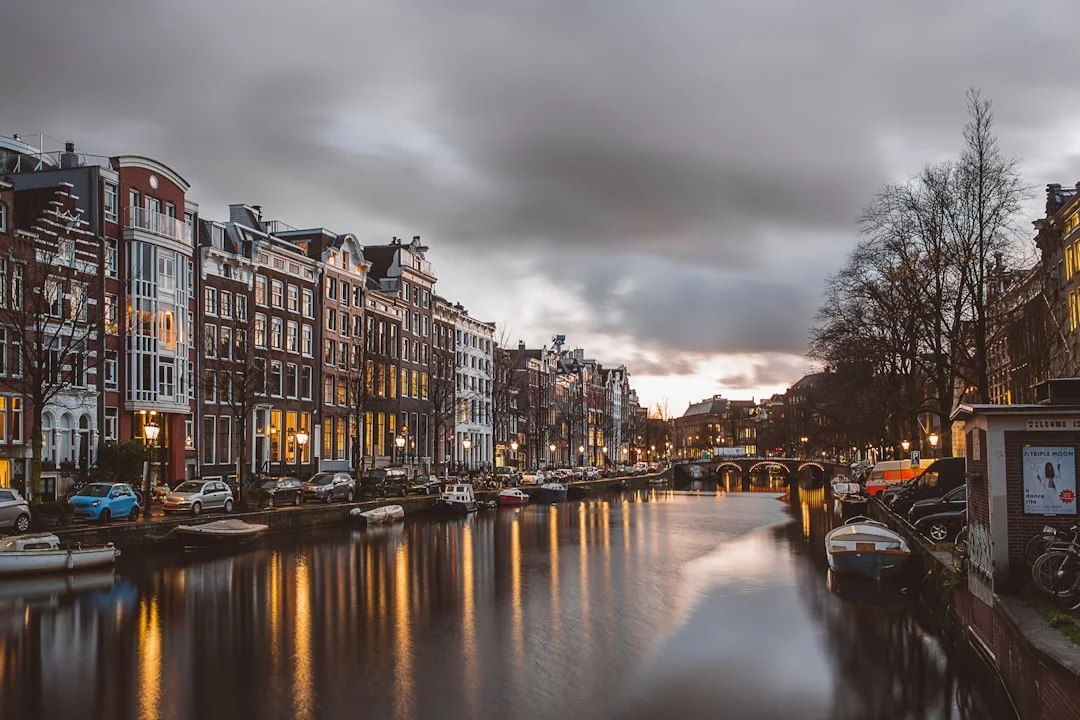
The UNESCO canal belt is the Amsterdam of the postcards — a horseshoe of grand 17th-century canals (Herengracht, Keizersgracht, Prinsengracht) lined with gabled merchant houses. Beautiful on foot, by bike or from the water.
- Historic
- Elegant
- Cultural
The Grachtengordel is Amsterdam's UNESCO-protected ring of 17th-century canals — Singel, Herengracht, Keizersgracht, and Prinsengracht — built during the Dutch Golden Age and now the city's most-photographed area. Best walked rather than cruised, especially early morning or late evening when the canal traffic thins out.
Best for
First-time visitors who want classic Amsterdam
Canal photography and 17th-century architecture
Independent shopping along the Negen Straatjes
Slow walks and people-watching
Couples and travelers with 2-3 days in the city
Avoid if you want
A genuine local atmosphere (this is the most-visited area)
Budget accommodation — canal-side rooms cost double
Driving — parking is €7.50 per hour and rare
Quiet streets between 10:00 and 18:00
Quick Facts
Best time: Early morning (07:00-09:00) or late evening (after 21:00)
Main attractions: Anne Frank House, Magere Brug, Bloemenmarkt, Negen Straatjes
Vibe: Postcard Amsterdam, tour-heavy, expensive, residential at night
Average meal price: €30-60 per person
Transport: Trams 1, 2, 12, 14, 17 all cross through
Walkability: Excellent for short walks, exhausting if you try the whole ring (5 km)
Skip if: You came for nightlife, street food, or the off-tourist Amsterdam
The Grachtengordel is what you've already seen on a thousand postcards before arriving. The half-ring of four canals — Singel, Herengracht, Keizersgracht, Prinsengracht — was built between 1612 and 1665 as a Dutch Golden Age status project: every wealthy merchant got a canal-side address, the surrounding marshland got drained in one massive piece of urban planning, and the result became the first major piece of modern city design in Europe. UNESCO recognized it in 2010. About 50,000 people live here. Tourists call it Amsterdam. They're all right.
What it's actually like
The Grachtengordel curves like a tree's growth ring around the medieval center: Singel innermost (originally a moat), then Herengracht (the wealthiest), then Keizersgracht, then Prinsengracht outermost. Each canal sits between rows of tall narrow houses with gabled tops, designed in the period 1610-1670 when Dutch merchants made fortunes from spice, shipping, and slaves. Many of those original buildings still stand.
Walking the full canal ring is roughly 5 kilometers — too much for one stretch. Most visitors do a 90-minute loop covering one or two canals and the cross-streets between them. The famous photo spots cluster around the Anne Frank House, Westerkerk, and the bridges where multiple canals visually intersect (such as Reguliersgracht meeting Herengracht and Keizersgracht — the 'seven bridges' photograph).
The neighborhood is residential, commercial, and tourist-heavy in equal measure. Lower floors are often shops, restaurants, or small museums; upper floors are apartments where rents start at €2,500 per month for one bedroom. Daily life here is more visible than in the Jordaan because the canals attract spectators.
Where to start
For a first walk, allocate 90 minutes and pick one section rather than trying to do the whole ring.
Start at the Bloemenmarkt (Singel near Muntplein) — the floating flower market, more touristy than locals would admit, but worth ten minutes.
Walk west along the Singel, then north along Herengracht. Cross at Wijde Heisteeg into the Negen Straatjes — nine short shopping streets between the canals, more interesting than any single shop along the canals themselves.
Cross north onto Keizersgracht, then continue north to the Anne Frank House (Prinsengracht 263). If you booked tickets, this is the time slot to aim for. If not, just take the canal photo and move on.
End at the Westerkerk square — the church tower is the visual anchor for half the canal postcards. The tower itself can be climbed in summer (tickets at westerkerk.nl).
Where to eat and drink
The Grachtengordel is dense with restaurants but quality is uneven — canal-front locations charge a location premium that doesn't always come with a kitchen to match. The cross-streets (the Negen Straatjes area, Utrechtsestraat, Reguliersdwarsstraat) generally have better food at lower prices.
Vinkeles inside The Dylan Hotel at Keizersgracht 384 — Michelin-starred, modern French, around €165 for the tasting menu. Book 2-3 weeks ahead.
Café Walem at Keizersgracht 449 — long-running canal-side café, breakfast and lunch focused, terraces both sides of the building. Around €18 for lunch.
Pancakes Amsterdam at Berenstraat 38 (Negen Straatjes) — Dutch pancakes done properly, around €12-15. Lines on weekends; come early or after 14:00.
Caulils at Keizersgracht 510 — small cheese-and-wine shop with a tiny tasting bar at the back. €25-35 for a board with wine.
Greetje at Peperstraat 23-25 (canal belt edge, near the Amstel) — modern Dutch cuisine in a small dining room, mains around €30. Book a week ahead.
Where to stay
The Grachtengordel concentrates more high-end hotels than any other Amsterdam neighborhood. If you want canal views, this is the area. Rates start around €250 and run past €1,000 per night for the suites.
Sofitel Legend The Grand at Oudezijds Voorburgwal 197 — former city hall, courtyard, indoor swimming pool, around €450 per night.
Hotel TwentySeven on Dam Square edge — small luxury hotel, eight suites only, rates from €800 per night.
The Dylan Amsterdam at Keizersgracht 384 — small luxury hotel built into 17th-century canal houses, rates from €380.
For mid-range (€180-280): Hotel Estherea (Singel 303), Ambassade Hotel (Herengracht 341), Andaz Amsterdam (Prinsengracht 587). All canal-front with character. Book direct or via Booking.com — prices match.
Hidden corners locals know
The 'seven bridges' view at the corner of Reguliersgracht and Herengracht. Stand on the bridge over Herengracht and look down Reguliersgracht: you see seven bridges in perfect alignment. Most tourists don't know to look for it; locals walking past barely notice anymore. Best at dusk when the bridge lights come on.
The Bijbels Museum (Herengracht 366-368) and Museum Van Loon (Keizersgracht 672) — two small private-house museums showing how canal merchants actually lived. Quieter than the famous museums and historically more telling. €12-15 each, both wheelchair-accessible.
The Begijnhof at Spui — an inner-city courtyard, technically just inside Centrum but accessed via the Grachtengordel. Free entry, residential, almost always quiet. The oldest wooden house in Amsterdam (1528) stands here.
The Spiegelkwartier on Nieuwe Spiegelstraat — the city's antique-dealer district, one block of small shops selling Dutch Old Masters drawings, 17th-century maps, and silver. Most don't expect visitors; browsing is fine if you're polite.
What to skip
The Bloemenmarkt as a place to actually buy flowers. It's a floating tourist market now — most vendors sell bulb-shaped souvenirs, t-shirts, and Delft-style ceramics rather than real tulips. Ten minutes is enough.
Canal cruises during peak hours (11:00-16:00). The boats are full, the canals are full of other boats, and the commentary is recorded in five languages back-to-back. If you cruise, go 09:00 or after 19:00.
Most restaurants directly on Damrak between Centraal and Dam Square. Tourist-priced, indifferent kitchens. Walk three streets in either direction for the same money and better food.
Getting around
The Grachtengordel curves around the city center, so most trams cross it rather than running along it.
Trams 1, 2, 12, 14, 17 all cross the canal ring at various points
Walking the full ring takes about 90 minutes — most visitors pick one section
Centraal Station is a 5-minute walk to the eastern (Singel) edge of the ring
GVB single ticket (1 hour): €3.40; 24-hour: €9.00
Cycling along the canals is the local norm, but the canal-side streets have heavy pedestrian traffic — go slowly
Best time to visit
Early morning (07:00-09:00) and late evening (after 21:00) are when the canals belong to residents rather than tourists. Light is better in those hours too — golden hour reflects off the canal water and the canal-house facades.
Late spring (April-May) and early autumn (September-October) are the comfortable visiting seasons. July and August are crowded throughout the day, with cruise-ship arrivals from the IJ side pushing visitor counts higher.
December has the canals lit for the Amsterdam Light Festival (mid-November through mid-January) — light installations along the canal route, visible from boat or footpath. Cold but worth a winter visit.
Avoid King's Day (April 27) unless you specifically want the festival. The canals become a floating party crowd and access to most bridges is restricted.
Facts and figures
Built: 1612-1665 as a planned urban expansion during the Dutch Golden Age
UNESCO World Heritage Site: 2010
Four main canals: Singel, Herengracht, Keizersgracht, Prinsengracht
Total canal-ring length: approximately 5 kilometers
Number of bridges across the canals: 1,500+ across Amsterdam (about 80 within the canal ring)
Notable canal houses open as museums: Het Grachtenhuis, Museum Van Loon, Willet-Holthuysen, Bijbels Museum
Anne Frank House: Prinsengracht 263, opened to public 1960
Westerkerk: completed 1631, the tallest church tower in Amsterdam
How it compares to other Amsterdam neighborhoods
Grachtengordel vs Jordaan: Jordaan sits west across Prinsengracht — smaller streets, smaller houses, more intimate. The Grachtengordel is grander, wider, more big-name hotels and museums.
Grachtengordel vs Centrum: Centrum (Old Centre) sits inside the canal ring — the medieval core, Red Light District, Dam Square, more commercial and street-busy. The Grachtengordel is more residential and quieter at street level.
Frequently asked questions
How long does it take to walk the full canal ring?
About 90 minutes at a moderate pace, more if you stop to photograph or shop. Most visitors do half — one or two canals plus the connecting streets — and skip the rest.
Are canal cruises worth it?
Yes for first-time visitors, no if you've done one before. Smaller operators (Those Dam Boat Guys, Captain Jack, Flagship Amsterdam) offer better experiences than the big Lovers boats.
What's the difference between the four main canals?
Singel is innermost (originally a moat). Herengracht is the wealthiest, with the grandest houses. Keizersgracht is middle. Prinsengracht is outermost and has the Anne Frank House.
Can I cycle along the canals?
Yes, and locals do constantly, but the canal-side streets have heavy pedestrian and tour-group traffic. Go slowly and yield to walkers.
Where's the best photo spot in the canal belt?
The Reguliersgracht-Herengracht corner for the 'seven bridges' view, or the bridge at Brouwersgracht and Prinsengracht (less photographed, equally beautiful) at golden hour.
Is the canal belt safe at night?
Yes — well-lit, populated, with continuous foot traffic until midnight. Standard urban precautions apply (bag closed, drink carefully) but it's one of Amsterdam's safer neighborhoods.
Plan your visit
Reserve a table
Vinkeles books 2-3 weeks ahead — reserve via the-dylan.com or TheFork. Greetje takes phone reservations 5-7 days ahead. Café Walem, Pancakes Amsterdam, and Caulils accept walk-ins but get full at peak meal times.
Find a hotel
Sofitel Legend, Hotel TwentySeven, and The Dylan all book direct on their own sites — prices match Booking.com but direct booking sometimes includes extras (free breakfast, late checkout). For mid-range canal hotels (€180-280), Hotel Estherea, Ambassade, and Andaz are the safe picks.
Tours and tickets
Anne Frank House: book at annefrank.org 6 weeks ahead. Canal cruises: GetYourGuide for the small operators, prices €18-25 for a 75-minute trip. Small-group walking tours of the Grachtengordel are available through GetYourGuide and Withlocals (about €35-50 per person).
Continue your day
Walk west across Prinsengracht into the Jordaan for narrower streets and brown cafés. Walk east into Centrum for Dam Square, the Royal Palace, and the Old Centre. Walk south 15 minutes to the Museumkwartier for the Rijksmuseum and Van Gogh Museum.
Related guides
Jordaan neighborhood guide — the intimate village west of the canal ring
Anne Frank House visitor guide — how to book, what to expect
Best canal cruises in Amsterdam — operators compared, what's worth it
Amsterdam canal architecture: a quick guide — gables, hoists, and how to read a canal house
Negen Straatjes shopping guide — what to find in Amsterdam's nine small streets
Best for
- Iconic canal scenery
- Canal cruises & cycling
- The Nine Streets shopping
- A classic first-visit base
Avoid if you want
- Budget stays
- A quiet, local feel
- Late-night nightlife
Where to eat

Where to stay

Ambassade Hotel
Ten 17th-century canal houses on Herengracht stitched into a literary boutique hotel with a CoBrA-art-filled lounge.

Pulitzer Amsterdam
Twenty-five 17th-century canal houses, stitched into one of Amsterdam's most storied hotels.
The Dylan Amsterdam
A 5-star luxury boutique hotel behind a canal gate on the Keizersgracht, home to two-Michelin-star Restaurant Vinkeles.
Getting there
Directions from the nearest transit hubs to Grachtengordel (Canal Belt).
Amsterdam's main station — intercity, sprinter, metro 51/52/53/54, most tram lines and city ferries all depart here.
Walkable from Centraal
Frequently asked
- Which are the main canals?
- Herengracht, Keizersgracht, Prinsengracht.
- Best way to see it?
- A [canal cruise](/canal-cruises) or the [Canals & Jordaan route](/cycling-routes/canals-jordaan-loop).
- Is it walkable?
- Entirely.