
Neighbourhoods
De Pijp
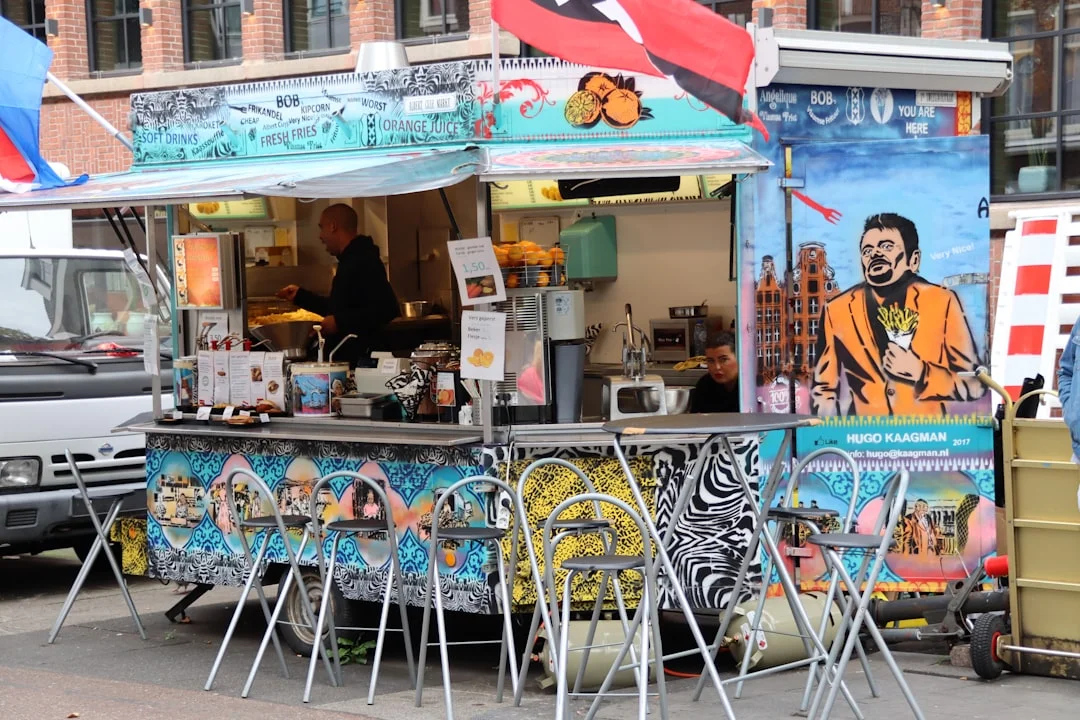
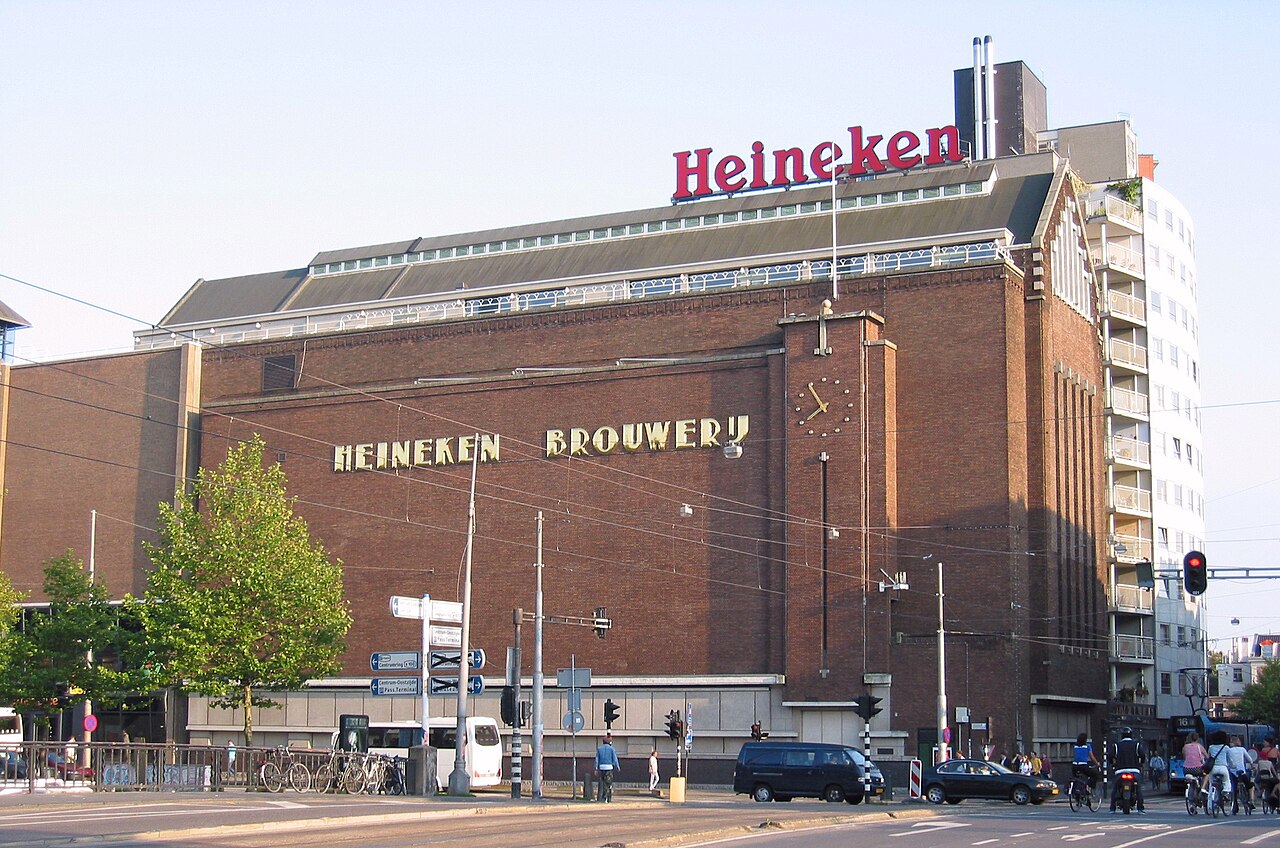
Lively, diverse and packed with places to eat, De Pijp is where locals send you for great food and everyday buzz. Home to the Albert Cuyp Market and the Heineken Experience, it's effortlessly cool and made for grazing.
- Lively
- Foodie
- Trendy
De Pijp is Amsterdam's most food-focused neighborhood, known for the Albert Cuyp Market, multicultural restaurants, brown cafés, and a lively street atmosphere. Best visited on weekday mornings between 9:30 and 12:00 — the market is in full flow, the crowds haven't arrived, and Sarphatipark is a short walk south.
Best for
Food lovers and market shoppers
Local atmosphere over polished tourism
Brunch, café culture, and street eating
First-time visitors with one morning to spare
Travelers who prefer dense neighborhoods over canal-belt postcards
Avoid if you want
Quiet evenings or sleep-friendly accommodation in summer
Saturday afternoon crowds at Albert Cuyp
The Heineken Experience as a real brewery visit — it isn't one anymore
Major museums in walking distance — those are in Museumkwartier
Quick Facts
Best time: Weekday mornings, 9:30-12:00
Main attraction: Albert Cuyp Market — 260+ stalls, daily except Sunday
Vibe: Food-focused, multicultural, lived-in
Average meal price: €15-30 per person
Metro: Line 52 to De Pijp station, 8 min from Centraal
Walkability: 20 min end to end
Skip if: You came for canals, museums, or quiet
De Pijp doesn't sit prettily on a tourist map. Built in the 1870s as workers' housing south of the old city, it grew into Amsterdam's densest food neighborhood almost by accident — a kilometer of market stalls running daily down Albert Cuypstraat, surrounded by streets named after Dutch painters who never lived there. Locals come for groceries, dinner, and the kind of brown café that hasn't changed its menu since 1985. Visitors come for the same things, slower.
What it's actually like
Most days here are domestic, not touristic. School runs at 8:30, market vendors unloading vans at 8:45, the same dogs being walked through Sarphatipark every morning. The neighborhood splits into three character zones: Oude Pijp (north of Albert Cuypstraat) is the loudest and most-visited; Nieuwe Pijp (south of Ceintuurbaan) is residential and slower, with more young families; the Diamantbuurt at the western edge keeps a mid-century working-class feel.
De Pijp earned its reputation as Amsterdam's most multicultural neighborhood — true historically, partly true today as rents pushed long-term residents out toward Nieuw-West. What stayed is the food culture: Surinamese roti shops, Turkish butchers, Italian delis, and brown cafés where the same regulars sit at the same tables. Avoid the Stadhouderskade end on summer weekends — that's where the Heineken Experience queues swallow the sidewalk, and the corner cafés double their prices to match.
Where to start
For a first walk, give the neighborhood 90 minutes on a weekday morning. The market is your anchor; everything else loops around it.
Arrive via Metro 52 at De Pijp station (eight minutes from Centraal). Exit toward Ceintuurbaan and walk north on Ferdinand Bolstraat.
Cut east to Albert Cuypstraat between 9:30 and 11:00. The produce stalls open at 9:00, but it takes them an hour to find their rhythm.
Walk the full length of the market east to west, then loop south into Sarphatipark — find a bench by the pond and watch the dog walkers.
End at the corner of Frans Halsstraat and Govert Flinckstraat, where the smaller bars and bookshops sit a block off the main routes.
Where to eat and drink
The neighborhood's food scene runs from market stalls to white tablecloths, with most action between €15 and €30 per person.
Bakers and Roasters at Eerste Jacob van Campenstraat 54 — the Australian-Brazilian breakfast spot that helped start Amsterdam's brunch trend. Opens at 8:30; the queue forms by 9:15. Pancakes around €13.
Restaurant Bazar at Albert Cuypstraat 182 — Middle Eastern fusion in a former church, dramatic ceiling, mains around €18. Open all day, which is rare here. Weekend dinners need a booking.
Café Berkhout at Stadhouderskade 77 — a working brown café across from the Heineken Experience, with a kitchen that does Dutch staples well. Bitterballen for €9, kroketten on bread for €11.
The Albert Cuyp Market itself is its own meal: stroopwafels off the iron at €3 each, raw herring at €4.50, hot kibbeling at €6 with garlic sauce. Eat standing up at the stall. Don't sit and pay €12 for the same fish at a corner café three meters away.
Where to stay
De Pijp is light on big hotels, which works in its favor — most accommodation here is small, residential, and quieter than the canal-belt equivalent.
Hotel Okura sits at the southern edge of De Pijp at Ferdinand Bolstraat 333, straddling the Diamantbuurt and Oud-Zuid border. It's the city's flagship Japanese hotel — multiple restaurants, two of them Michelin-starred (Yamazato and Ciel Bleu). Rooms start around €350; the restaurants run significantly higher.
For something more in scale with the neighborhood, look at the smaller B&Bs along Frans Halsstraat and Eerste Jan Steenstraat. Compact rooms, no breakfast, rates between €120-180. Bring a sleep mask: street noise carries until midnight on summer weekends.
If you want quiet, stay one neighborhood north in Museumkwartier and walk down. It's a fifteen-minute walk to the Albert Cuyp and you'll sleep through the night.
Hidden corners locals know
The early-morning Albert Cuyp run before 9:00 — most vendors are still setting up but the fish stalls have their best catch out by 8:30. Buy first, walk the empty market, leave before the tourists arrive.
The Gerard Doustraat one block south of Albert Cuyp. Many of the same vendors operate small storefronts here at half the noise. Most visitors never know it exists because it doesn't show up on the market maps.
Bagels and Beans at Ferdinand Bolstraat at 7:30 — chain bakery, but at that hour you're sharing the room with construction workers and night-shift nurses, not tourists. Coffee is €3, fresh bagels €4.50.
What to skip
The Heineken Experience. €25 for a corporate marketing tour of a brewery that hasn't actually brewed beer here since 1988. Go to Brouwerij 't IJ in Oost instead — same price range, real working brewery, better beer, and you can reach it from De Pijp in under 20 minutes by tram.
The Albert Cuyp on Saturdays between 12:00 and 16:00. The market becomes a slow-moving crowd of phones held up over heads. Vendors triple their stroopwafel prices for visitors who don't know better. Go Tuesday or Wednesday morning instead.
The waffle places on Ferdinand Bolstraat with rainbow-coloured display photos. Tourist tax, not local food. The market vendors three streets away charge €3 for a better waffle off a working iron.
Getting around
De Pijp is small enough to walk end to end in twenty minutes. The metro and trams are mainly useful for arriving and leaving.
Metro 52 (Noord-Zuid line): direct from Centraal Station to De Pijp station in eight minutes
Trams 4 and 24: run along Vijzelstraat and Ferdinand Bolstraat
Tram 12: useful for connecting to Museumplein and Oud-Zuid
GVB single ticket (1 hour): €3.40 — buy on the tram or via the GVB app
GVB 24-hour ticket: €9.00 — pays for itself after three rides
Cycling is faster than transit for any in-neighborhood trip, but the market streets are too crowded to cycle through during the day. Walk Albert Cuyp; cycle everywhere else.
Best time to visit
Spring weekdays between April and June are the sweet spot. Terraces are open, the market is busy without being crushing, and the painter streets fill with white blossoms from the cherry and magnolia trees.
Summer is the obvious season but the busiest. July and August Saturdays at the Albert Cuyp move at walking-pace from one end to the other. Locals leave the neighborhood on those weekends or stick to the side streets.
Winter rewards visitors who don't mind the rain. The market still runs (with fewer vendors and earlier closing around 16:00), the cafés are warm and half-empty, and the canals freeze occasionally if January gets cold enough — though that has been rare in the last decade.
Avoid King's Day weekend (April 27) entirely. The neighborhood becomes a music festival inside a packed crowd. Beautiful for ten minutes, exhausting after thirty.
Facts and figures
Developed: 1870s, as workers' housing south of the Singelgracht
Sub-areas: Oude Pijp, Nieuwe Pijp, Diamantbuurt
Borough: Amsterdam-Zuid
Albert Cuyp Market: largest open-air market in the Netherlands, daily except Sunday, approximately 260 stalls along 1 km of Albert Cuypstraat
Sarphatipark: ~4 hectares, named after Samuel Sarphati (1813-1866), Amsterdam doctor and urban developer
Metro 52 De Pijp station: opened 2018 as part of the Noord-Zuid line
Streets named after: Dutch Golden Age painters (Frans Hals, Jan Steen, Ferdinand Bol, Govert Flinck, Ruysdael, Quellijn)
How it compares to other Amsterdam neighborhoods
De Pijp vs Jordaan: Jordaan is older (17th century), prettier (canals), quieter at night, with more galleries and antique shops. De Pijp is denser, louder, more food-focused, and feels more like a real working neighborhood.
De Pijp vs Oud-Zuid: Oud-Zuid sits directly south with grander boulevards, formal parks (Vondelpark on one edge), and significantly more wealth. Visit Oud-Zuid for museums and Vondelpark walks; visit De Pijp for daily life.
Frequently asked questions
Is De Pijp safe at night?
Yes. Standard urban precautions apply — bag closed, valuables out of view in crowded market areas — but the neighborhood is residential and well-lit, with bars and cafés open until late on most streets.
Is De Pijp worth visiting if I only have one day in Amsterdam?
Yes, if you give it a morning. The Albert Cuyp Market between 10:00 and 12:00 plus a walk through Sarphatipark gives you 90 minutes of real Amsterdam neighborhood feeling, then you can combine with Museumplein next door.
Where should I park in De Pijp?
You shouldn't. Street parking costs around €7.50 per hour and is restricted in most blocks. Use the Q-Park at Heinekenplein or take public transit.
Can I walk to De Pijp from Centraal Station?
Yes, but it's a 30-minute walk through the city center. Metro 52 takes eight minutes door to door. Walk back if you're not tired.
What's open on Sundays in De Pijp?
Most cafés and restaurants, no market. Sunday is the calm day in the neighborhood, often the best day for terrace coffee.
What's the closest tram stop to Albert Cuyp Market?
Tram 4 to Stadhouderskade or Tram 24 to Ferdinand Bolstraat puts you within three minutes walking. Metro 52 to De Pijp station is a five-minute walk.
Plan your visit
Reserve a table
Restaurant Bazar (Albert Cuypstraat 182) takes online bookings via their website or TheFork for weekend dinners. Café Berkhout (Stadhouderskade 77) is usually walk-in, but groups over four should call ahead. Bakers and Roasters doesn't take reservations — arrive by 8:25 or after 11:00 to skip the queue.
Find a hotel
Hotel Okura sits at the southern edge of De Pijp and books directly via okura.nl or through Booking.com. For smaller B&Bs along Frans Halsstraat and Eerste Jan Steenstraat, search 'De Pijp' on Booking.com or Airbnb — most rooms run €120-180 per night.
Tours and tickets
Albert Cuyp Market is free, no tickets needed. For a guided 2-3 hour food walking tour of De Pijp, search GetYourGuide or Viator — prices around €45-65 per person. Skip the Heineken Experience tickets; book a Brouwerij 't IJ brewery tour in Oost instead.
Continue your day
Walk 15 minutes north via Hobbemastraat to Museumplein for the Rijksmuseum and Van Gogh Museum. Walk 10 minutes west to Vondelpark for a longer green stroll. Walk south into Oud-Zuid for cafés and the Concertgebouw.
Related guides
Jordaan neighborhood guide — Amsterdam's older, prettier sibling
Oud-Zuid neighborhood guide — De Pijp's quieter southern neighbor
Where to eat in De Pijp — twelve places ranked by a resident
Best Amsterdam markets compared — Albert Cuyp, Noordermarkt, Dappermarkt, Ten Katemarkt
Amsterdam tram guide — tickets, lines, GVB apps, what trams actually cost
Best for
- Eating (Albert Cuyp, global food)
- A lively local atmosphere
- The Sarphatipark
- Casual bars
Avoid if you want
- Quiet
- Big museums in the area
- A polished, upscale feel
Where to eat


What to see

Where to stay
Getting there
Directions from the nearest transit hubs to De Pijp.
Amsterdam's main station — intercity, sprinter, metro 51/52/53/54, most tram lines and city ferries all depart here.
Tram or metro from the centre
Frequently asked
- What's the Albert Cuyp?
- Amsterdam's best-known street market (Mon–Sat).
- Best for food?
- Arguably the city's best eating.
- Family-friendly?
- Yes — casual and easy.